About PAM Best Practice
Home › About PAM Best Practice
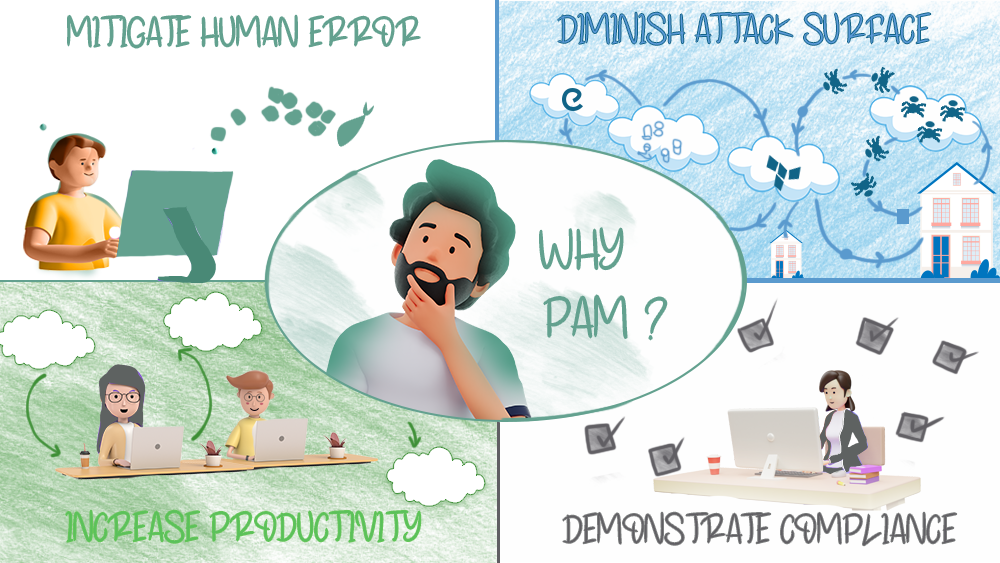
Bridge the £42 Billion PAM Talent Crisis
In 2024, the PAM market reached £3.5 billion. By 2037, it will hit £42 billion. Yet organisations report that two-thirds face critical talent shortages in cybersecurity—and PAM practitioners are the rarest.
This is the gap we bridge. Vendor training teaches tools. Colleges teach theory. We teach the discipline—so you can lead in an industry desperate for practitioners who understand process, governance, compliance, and people—not just technology.
Most organisations fail at PAM not because tools are weak, but because they don’t understand the process. Auditors don’t check your technology; they check your governance. Our course inverts this: understand process first. Alignment with compliance comes next. Then technology becomes a strategic choice, not a desperate purchase.
Why PAM Expertise Matters Now
For Organisations
- Auditors aren’t checking your tools; they’re checking your processes
- Vendor implementation failures cost millions because process was never understood
- GDPR, SOX, PCI DSS, HIPAA fines for PAM failures now reach £20 million+
- 68% of breaches involve a human element; 31% involve stolen credentials
For Practitioners
- PAM careers are rare and lucrative (market shortage + skill premium)
- You’ll lead cross-functional teams (CISO, Compliance, IT, SOC, Business)
- You’ll translate between auditor, vendor, and operator languages
- Job security: £42 billion market, tiny talent pool = rare expertise = high value
For Universities & Training Partners
- Industry expects PAM basics from graduates; most colleges don’t teach it
- We provide the curriculum so you can graduate PAM-ready professionals
- Your students’ post-graduation job prospects improve dramatically
- Partner with an industry-backed programme, not a siloed course

It Started in a Lecture Theatre
PAM Best Practice began at Teesside University. What started as a guest lecture quickly revealed a wider gap in cybersecurity education: talented students were preparing to enter the industry without being taught Privileged Access Management as a practical discipline.
At the same time, many organisations were struggling with the same problem from the opposite direction. Training often focused on how to operate a single vendor platform, but gave far less attention to the decisions that make a PAM programme succeed.
Those early lectures grew into a structured approach to PAM education, helping learners, universities, and employers understand privileged access properly, from the foundations through to real-world programme delivery.
More Than a Product Manual
Many PAM courses teach people how to click through one vendor console. That is useful, but it is only one part of the challenge.
Successful PAM programmes depend on more than technology. Teams need to understand least privilege, Joiner-Mover-Leaver processes, Tier 0 assets, privileged account discovery, service accounts, just-in-time access, zero standing privilege, session monitoring, access reviews, governance, and stakeholder adoption.
That is why our training is vendor-neutral and principle-first. We teach the why behind every control so that learners and organisations can make better decisions, whatever technology they use.

Bridging Education and Industry
There is a long-standing disconnect between what universities are able to teach and what employers need from new cybersecurity talent on day one. PAM Best Practice sits deliberately in that gap.
Students and emerging practitioners gain practical, applied knowledge of real-world PAM concepts, tools, techniques, and decisions. Employers gain access to a better-prepared talent pipeline: people who understand privileged access as a programme, not just as a product.
The result is stronger on both sides. Learners become more confident and employable, while organisations benefit from teams that can contribute to PAM projects faster, communicate risk more clearly, and support adoption more effectively.
A Framework, Not a Feature List
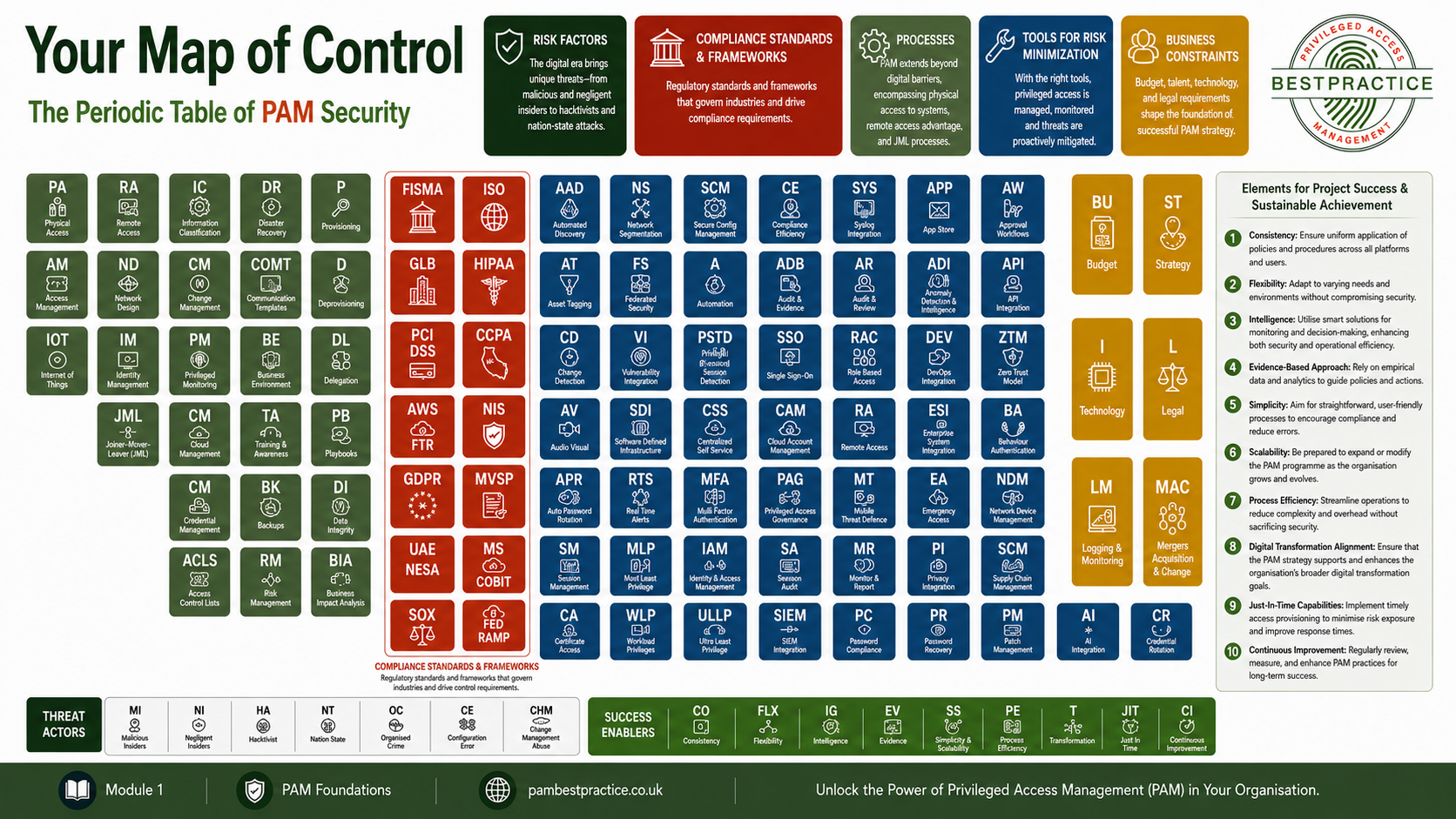
Our Periodic Table of PAM Security maps the full discipline of privileged access management and helps learners understand how controls connect across a real programme.
Know Where You Stand
The PAM Score assessment and five-level maturity model help organisations understand strengths, gaps, and practical next steps for improvement.
People and Process at the Core
PAM succeeds when technical control is supported by governance, communication, stakeholder trust, and sustainable operating processes.

Built for Future Practitioners and Organisations
Whether you are a student, a career-changer, or an IT professional moving into cybersecurity, PAM Best Practice helps you build confidence in one of the most important areas of identity security.
For organisations, universities, and partners, PAM Best Practice supports stronger talent pipelines, better-prepared teams, and more sustainable PAM adoption. The outcome is practical capability: fewer failed deployments, faster adoption, and a clearer path to reducing privileged access risk.
Who Benefits From This Course
Security Leaders & CISOs
Move from reactive tool buying to strategic PAM governance aligned with Zero Trust and compliance requirements.
IT Operations & Infrastructure Teams
Understand why PAM matters operationally, how to design just-in-time access, and how to reduce friction while staying secure.
Compliance & Risk Professionals
Learn what auditors actually need as evidence, how to build audit-ready processes, and where tools fit in the governance model.
Identity & Access Governance Teams
Design PAM policies that work with (not against) business operations, and enforce segregation of duties effectively.
Practitioners Planning PAM Careers
Enter a market where your knowledge directly translates to rare, high-value expertise. You’ll be leading teams within 18 months.
Start Where You Are
Not sure how mature your PAM programme is? Start by exploring the PAM help resources. Want to build the skills properly? Explore the PAM course. Interested in partnering, mentoring, or supporting the next generation of PAM practitioners? Get in touch.
Frequently Asked Questions
What is vendor-neutral PAM training?
Vendor-neutral PAM training teaches the principles, processes, and governance behind Privileged Access Management rather than focusing only on one product or platform. It helps learners understand how to make good PAM decisions in any environment.
Who is PAM Best Practice for?
PAM Best Practice is for students, career-changers, IT professionals, universities, employers, and partners who want to build practical capability in Privileged Access Management.
How is PAM different from learning a PAM tool?
Learning a PAM tool teaches you how to operate a specific platform. Learning PAM teaches you how to design, govern, adopt, and improve a privileged access programme across people, process, and technology.
Why does PAM matter?
Privileged access gives users and systems powerful control over critical assets. If privileged access is poorly managed, attackers or insiders can cause significant operational, financial, and reputational damage. Good PAM reduces that risk by controlling, monitoring, and governing privileged access.